

SUBSCRIBE TO OUR FREE NEWSLETTER
Daily news & progressive opinion—funded by the people, not the corporations—delivered straight to your inbox.
5
#000000
#FFFFFF
To donate by check, phone, or other method, see our More Ways to Give page.
Daily news & progressive opinion—funded by the people, not the corporations—delivered straight to your inbox.

“No lie can change the fact that he remains the subject of an International Criminal Court arrest warrant alleging war crimes and crimes against humanity,” New York City's mayor said of the Israeli prime minister.
New York City Mayor Zohran Mamdani hit back Thursday after Israeli Prime Minister Benjamin Netanyahu took to the United Nations General Assembly podium to accuse him of supporting Hamas and making Jewish New Yorkers feel unsafe—remarks that came after delegates from scores of countries walked out of the chamber to protest the far-right fugitive's presence.
Refuting allegations that Israel is committing genocide in Gaza—where Israeli forces have killed more than 73,000 Palestinians, including more than 21,500 children, since the Hamas-led attack of October 2023—Netanyahu said, "To all those spreading these lies about my country and about our brave soldiers, whether they sit in this hall or in the office of the antisemitic mayor of New York City, I say this: Shame on you."
"Mr. Mamdani, since you were elected mayor of this city, many Jews no longer feel safe in New York," the prime minister claimed. "It’s no wonder... You falsely and repeatedly accuse Israel of genocide. Israel didn’t commit genocide. Israel prevented genocide. And that’s exactly what Mr. Mamdani’s Hamas buddies would have done to us had we not stopped them. They would have killed every last one of us."
Mamdani issued a statement later Thursday saying: “As he has done time and again, Prime Minister Netanyahu used his speech to repeat baseless lies meant to sanitize his genocide of Palestinians. Yet no lie can change the fact that he remains the subject of an International Criminal Court arrest warrant alleging war crimes and crimes against humanity."
Netanyahu and Yoav Gallant, his former defense minister, are fugitives from the International Criminal Court, where they are accused of murder and forced starvation of Palestinians in Gaza. The ICC also issued arrest warrants for three Hamas leaders, but Israel assassinated them.
While neither Israel nor the United States is a party to the Rome Statute governing the ICC, the treaty states that people from nonsignatory states who commit alleged crimes in states that are party to the treaty—as Palestine is—can be arrested in third countries and subsequently tried by the court.
Mamdani has said that Netanyahu should be arrested and brought before the Hague-based tribunal for trial, but that he lacks the legal authority to apprehend the prime minister in New York.
The International Court of Justice—also located in The Hague, Netherlands—is currently processing a genocide case filed against Israel by South Africa and formally supported by nearly 20 nations. The case is based on what the ICJ called the plausibility that Israel is committing genocide in Gaza. The court has issued a series of provisional orders for Israel to adhere to the Genocide Convention—orders that critics say Israel has simply ignored.
Last year, an independent UN commission of inquiry found that Israel had committed genocide in Gaza, a conclusion shared by the International Association of Genocide Scholars and other experts including many Israeli and diaspora Jewish academics, jurists, human rights campaigners, and others.
As Netanyahu prepared to deliver his UN speech Thursday, delegates from a reported 77 nations walked out of the chamber in protest.
"If there are any other moral cowards who haven’t yet left this hall—please do so now," the prime minister said. "Thank you very much."
While some observers applauded the display of solidarity with Palestinians, others expressed disgust that Netanyahu was allowed to address the world body and that he has not yet been brought to justice.
"The head of the genocidal Israeli apartheid regime, a fugitive indicted for crimes against humanity, was allowed to enter the US and to address the UNGA today, without arrest," said Craig Mokhiber, a former senior UN official who resigned in protest of what he described as the world body’s failure to stop Israel’s genocidal war.
"Netanyahu insulted delegations, openly celebrated the regime’s many crimes, bragged about its terrorist pager attacks on Lebanon, repeated the regime’s debunked genocide propaganda, defended the illegal occupation of Palestine and Syria, lied incessantly, called violent, racist, illegal Zionist settlers 'peaceful' and 'honorable people,' labeled human rights defenders as 'antisemites,' even arrogantly attacked American citizens and officials for speaking out against the regime’s crimes," he continued.
"This violent psychopath cannot hide behind [US President Donald] Trump’s skirts forever," Mokhiber added. "He (and his collaborators) must be captured and brought to justice. And the UN must finally act to isolate the regime and hold it accountable. "
Referring to Netanyahu's address and Trump's threat on Tuesday to "annihilate" Iran during his rambling, lie-laden General Assembly speech, University of Colorado Law School associate professor Maryam Jamshidi said on social media, "Between Trump threatening Iran w/annihilation and Netanyahu bragging about Israel’s pager attacks, the UN podium has become a venue for promoting genocide, crimes against humanity, and war crimes."
Meanwhile, people took to the streets of New York to protest Netayahu's presence in the city, US complicity in Israeli crimes, and to show solidarity with Palestinians.
Hundreds of protesters gathered outside UN headquarters in Turtle Bay for a sit-in demonstration led by Jewish Voice for Peace. Demonstrators blocked roads while chanting slogans including, "Netanyahu you can't hide, you are wanted for genocide!"
As Common Dreams reported earlier Thursday, more than 100 demonstrators were arrested.
THEY’RE PUTTING THEM IN THE BUS!
Susan Sarandon Chelsea Manning, and MANY OTHER CELEBS ARRESTED at UN protest ahead of Israeli Prime Minister Benjamin Netanyahu's address! 👀
The 79-year-old actress – who has previously said she's been blacklisted over pro-Palestinian comments… pic.twitter.com/pvzuRGwGG4
— SANTINO (@TheRealSantino) September 24, 2026
Among those reportedly arrested were progressive congressional candidate Darializa Avila Chevalier; actors Susan Sarandon, Hannah Einbinder, and Cynthia Nixon; New York state Assemblymember Emily Gallagher (D-50); Democratic New York City Councilmembers Chi Ossé and Alexa Avilés; former Army whistleblower Chelsea Manning; and Palestinian American political activist Linda Sarsour.
"I will never, ever be silent," Sarsour said on Facebook. "I will never just accept the world as it is. I want history to record for future generations of Palestinians that we fought. At every turn. In every way. When it was easy and when it was hard."
"I want Palestinian girls in Gaza to see me in my hijab and my unapologetic Palestinian blood fighting for them to live FREE," she added. "This is bigger than all of us. Netanyahu is a war criminal and belongs in The Hague, not the United Nations."

The mayor has said New York can’t enforce the ICC warrant against Israel’s prime minister, but one human rights lawyer argued it’s “not the only tool available to the US when it comes to holding Netanyahu accountable.”
As Israeli Prime Minister Benjamin Netanyahu prepares to land in New York for a speech at the United Nations General Assembly on Thursday, calls are once again mounting for the accused war criminal to be arrested.
While campaigning last year, New York City Mayor Zohran Mamdani pledged that if the prime minister ever set foot in his city, he'd find himself in handcuffs, pursuant to an International Criminal Court (ICC) warrant, which accused him of war crimes and crimes against humanity in Gaza, where Israel's genocidal military assault has killed nearly 74,000 people, including more than 21,000 children.
After becoming mayor, Mamdani backed off the pledge earlier this summer, stating that New York lacked the “independent legal authority” to detain him under the ICC warrant. However, he said Netanyahu should still be "arrested and tried" by the federal government.
In the days leading up to his visit to New York, which is expected to be brief, Netanyahu indicated he planned to address the mayor during his General Assembly speech, falsely accusing him of supporting Hamas and inciting riots against Jewish New Yorkers.
“I'm coming to the UN,” the prime minister said. “I'm going to tell the truth about our heroic soldiers, and I'm going to tell the truth about you."
Mamdani hit back during a CNN interview on Tuesday: "I have been clear about the way that I see the world. And I always owe New Yorkers that honesty. And when it comes to Benjamin Netanyahu, I have described him as I believe him to be: a war criminal and an architect of a horrific genocide of the Palestinian people."
Of the ICC warrant, he reiterated that it was "something that should be honored, because what we want to see... is a faith in our politics, a faith in accountability."
In July, a YouGov poll found that 49% of Americans believed the US government should arrest Netanyahu under the warrant, 27% said it should not, and 23% were unsure.
President Donald Trump stated earlier this summer that Netanyahu “will not be arrested, in any way, shape, or form" while visiting the US. His administration's position, as stated in a February 2025 executive order, is that Netanyahu can't be arrested. The ICC, it says, “has no jurisdiction over the United States or Israel” because, unlike most other nations, neither is a party to the Rome Statute, which created the court.
Jake Romm, a legal adviser for the Hind Rajab Foundation—a group named after a 5-year-old Palestinian girl killed by Israeli forces—argued Tuesday in The Nation that even if the ICC warrant can't be enforced on US soil, it "is not the only tool available to the US when it comes to holding Netanyahu accountable."
Romm noted the existence of "two robust federal criminal statutes," the War Crimes Act and the Genocide Statute, which he said incorporate "important international instruments into US law"—the Geneva Convention governing the laws of war and the Genocide Convention, respectively.
He wrote that both of these laws give the US jurisdiction over alleged war criminals “regardless of where the crimes have been committed” when the suspect is physically present in the US, or the crimes were committed against US nationals.
Romm acknowledged that Netanyahu is shielded from arrest during his official UN visit and that sitting heads of government generally enjoy immunity from national courts, but argued that those protections do not eliminate the United States' underlying authority to prosecute him under federal war crimes and genocide laws.
"The United States has the ability to arrest Netanyahu for crimes under US law and to prosecute him in US courts," Romm wrote. "I stress this not because I believe that an administration that has, at every turn, deepened its complicity in Israel’s crimes will suddenly change. I stress the US’s ability and obligation to arrest Netanyahu—and all Israeli perpetrators of the genocides in Palestine and southern Lebanon—in order to make one thing clear: Every day that Netanyahu remains free is a day that the US has allowed him to remain free."
It's not just the United States that has allowed Netanyahu to travel freely despite the warrant. Emma Fourreau, a French member of the European Parliament, accused her nation's government—which is obligated to arrest Netanyahu under the Rome Statute—of having "trample[d] on international law" by giving his aircraft clearance to pass through its airspace en route to New York.
Craig Mokhiber, a former senior UN human rights official who resigned in 2023 while accusing Israel of carrying out a “textbook genocide” in Gaza, said the fact that Netanyahu would be showing up at the UN unencumbered, even while being "universally despised, and blocked from travel to most countries on the planet," was a "stain" on the entire institution.
"He will even be allowed to enter UN premises and to address the [General Assembly], received as a VIP rather than the blood-soaked war criminal that he is," Mokhiber said on social media, describing it as one of many failures of the institution to respond to Israel's actions in Gaza.
He noted that the General Assembly had not stripped Israel of its credentials as it did with apartheid-era South Africa, that the UN Security Council had endorsed the Trump-led "Board of Peace" proposal to govern postwar Gaza, and that Secretary-General António Guterres had declined to use the word "genocide" to describe Israel's conduct, even while other top UN experts had.
"The genocidaires are not just walking among us, they are ruling over us. They are trying to normalize genocide and apartheid," Mokhiber said. "We, in our millions, must act to denormalize these scourges, to hold the perpetrators and accomplices accountable, and to ensure they never have a moment’s peace until justice prevails."
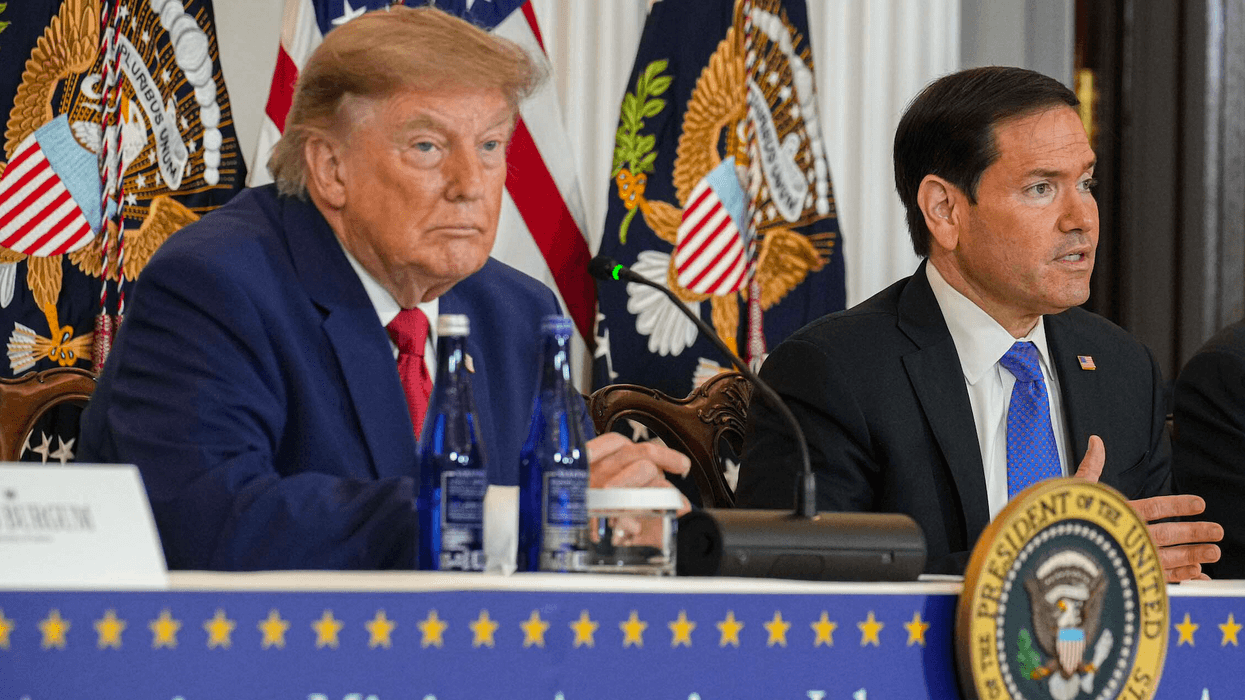
In what the Democratic senator called an effort at “obstructing investigations of Netanyahu’s war crimes,” the Trump administration is planning a dramatic escalation of its sanctions against the court.
As the United Nations General Assembly prepared to meet, a US senator said President Donald Trump and Secretary of State Marco Rubio should face sanctions for their role in trying to destroy the International Criminal Court in order to protect Israeli Prime Minister Benjamin Netanyahu.
"If European countries and other signatories to the International Criminal Court (ICC) have any self-respect, they'd sanction Rubio and Trump for obstructing investigations of Netanyahu's war crimes," wrote Sen. Chris Van Hollen (D-Md.) Monday on social media.
He was responding to a report from the Wall Street Journal detailing "a sharp escalation" in the Trump administration's efforts to, in Rubio's words, "dismantle" the ICC, which issued an arrest warrant for Netanyahu in 2024. The body accused the prime minister and then-Defense Minister Yoav Gallant of war crimes and crimes against humanity in Gaza, including the deliberate use of starvation as a weapon of war.
The ICC has also reportedly launched investigations into two other far-right ministers in Netanyahu's cabinet, Finance Minister Bezalel Smotrich and National Security Minister Itamar Ben-Gvir, for their roles in aggressively expanding Israeli settlements in the occupied West Bank, which are considered illegal under international law.
The Trump administration had already aggressively sanctioned ICC officials involved in efforts to prosecute Americans or Israelis, including then-chief prosecutor Karim Khan and several judges and prosecutors. It had also sanctioned UN special rapporteur on Palestine Francesca Albanese and several Palestinian human rights organizations that had brought evidence of alleged Israeli crimes before the tribunal.
Now, The Journal reports that:
The Trump administration is preparing to impose sweeping sanctions on the [ICC]...
The sanctions would forbid most transactions with the ICC after a grace period of six to seven months... That could potentially cripple the court by prohibiting it from conducting transactions in US dollars, cutting it off from much of the global financial system.
It is unclear when a final decision and announcement might come, though some US officials said the move could be finalized as soon as this week during the United Nations General Assembly meeting or in the following days.
Several world leaders have been vocally critical of the US attack on the ICC, though they've stopped short of calling for sanctions against US officials.
Responding to Rubio's sanctions in August, European Commission President Ursula von der Leyen and European Council President António Costa said that the ICC's "judges and officials must be able to act independently and without external pressure."
Dutch Foreign Minister Tom Berendsen, whose nation is home to the ICC, said the Netherlands disapproves of efforts to sanction the court, adding that Dutch officials were actively working with the EU to protect the court from institution-wide US sanctions. Possible protective measures reportedly include alternative banking and payment arrangements outside the US dollar system.
There have also been calls within the European Parliament, including from Spanish socialist politician Iratxe García Pérez and others, to activate the EU's so-called "blocking statute," which would prohibit European companies from complying with the US sanctions.
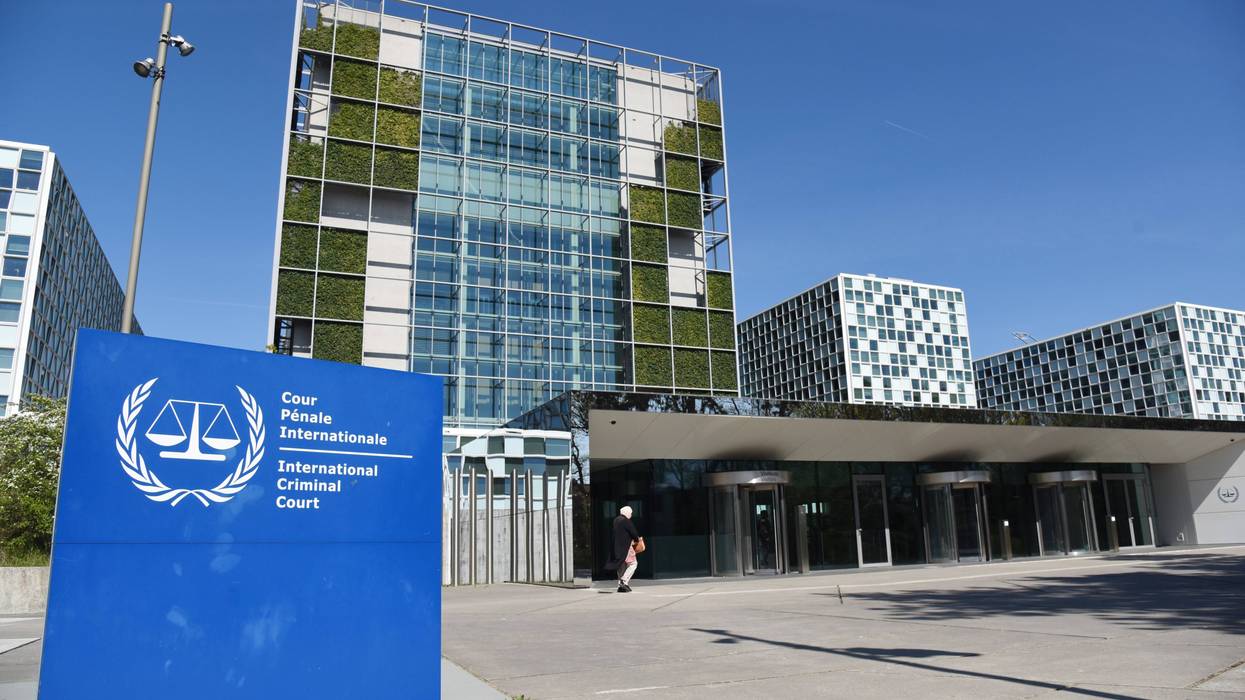
"When judicial actors are threatened for applying the law, it is the international legal order itself that is placed at risk."
The International Criminal Court on Wednesday hit back at the Trump administration one day after US Secretary of State Marco Rubio announced new sanctions against ICC officials.
The ICC described the new sanctions, which target President Tomoko Akane and senior trial lawyer Abdoulaye Saye, as "a flagrant attack against the independence of an impartial judicial institution."
"When judicial actors are threatened for applying the law, it is the international legal order itself that is placed at risk," the ICC said. "Threats and coercive measures also impact the ability of victims to seek justice, as they turn to the court when all other avenues have been exhausted."
However, the court said that it is "undeterred" from pursuing its mission, while pledging to stand "firmly behind its personnel and behind victims of unimaginable atrocities."
In total, the US has now sanctioned half of the ICC's 18 judges, as well as both of the court's deputy prosecutors, a former prosecutor, and a staff member.
The sanctions on the ICC also drew condemnation from the government of the Netherlands, where the court is physically located.
In a social media post, Dutch Foreign Minister Tom Berendsen insisted that "international courts and tribunals must be able to freely carry out their mandates," and pledged to "fully support the court and its staff."
Balkees Jarrah, the Middle East and North Africa director at Human Rights Watch, said the sanctions were "just the latest example of the Trump administration’s utter contempt for international law and a naked attempt to shield American and Israeli officials implicated in serious crimes from justice."
Although no American is currently under investigation or being tried by the ICC, the Trump administration has been targeting ICC officials who have been investigating alleged war crimes committed by Israel with the backing of the US government.
Saye, a target of Tuesday's US sanctions, was charged with investigating war crimes allegedly committed by Israel during its yearslong assault on Gaza.
The Trump administration also sanctioned then-ICC prosecutor Karim Khan, who obtained arrest warrants for Israeli Prime Minister Benjamin Netanyahu and former Israeli Defense Minister Yoav Gallant for alleged war crimes and crimes against humanity in Gaza, last year.

"When you are shameless, contemptuous of international law, and morally bankrupt, you boast of disgrace as though it were an achievement," said one critic.
US Secretary of State Marco Rubio on Tuesday drew an outraged reaction from critics after he unveiled sanctions against Tomoko Akane, president of the International Criminal Court.
In announcing the sanctions, Rubio described the ICC as "a corrupt and fatally politicized" institution that has supposedly "abused its authority and exceeded its mandate."
Rubio said the ICC "has repeatedly attempt to assert authority over... the United States and other countries that have not consented to its jurisdiction," which he said "sets a dangerous precedent for all nations."
In addition to sanctioning Akane, Rubio said the US would also be sanctioning ICC senior trial lawyer Abdoulaye Saye.
While Rubio did not mention what specific actions the ICC has taken to warrant such sanctions, a Tuesday report in The Guardian noted that Saye was charged with investigating war crimes allegedly committed by Israel during its years-long assault on Gaza.
The Trump administration had previously sanctioned then-ICC prosecutor Karim Khan—who obtained arrest warrants for Israeli Prime Minister Benjamin Netanyahu and former Israeli Defense Minister Yoav Gallant—and an additional eight ICC officials.
The social media account of Drop Site News accused Rubio of attacking the court solely to protect Netanyahu from war crimes prosecution, pointing out that "there is currently not a single American citizen under indictment, investigation, or facing an arrest warrant" from the ICC.
The sanctions earned the praise of the Israeli American Public Affairs Committee (AIPAC), which accused the ICC of conducting "politically motivated investigations and prosecutions targeting America and Israel."
Rutgers Law School professor Adil Haque said the ICC sanctions showed the US was acting like a "rogue government" and engaged in "deranged behavior."
Michael Karanicolas, law professor at Dalhousie University, didn't just point fingers at the US over the sanctions, but at US allies who have sat back as international institutions have come under assault.
"I’m no longer surprised by the Trump administration’s efforts to destroy the ICC," wrote Karanicolas. "What I keep waiting for is any response from Canada or the European governments who ostensibly still believe in international law to defend these institutions."
War correspondent and international political analyst Elijah Magnier delivered a withering rebuke of Rubio's announcement.
"When you are shameless, contemptuous of international law, and morally bankrupt," wrote Magnier, "you boast of disgrace as though it were an achievement."
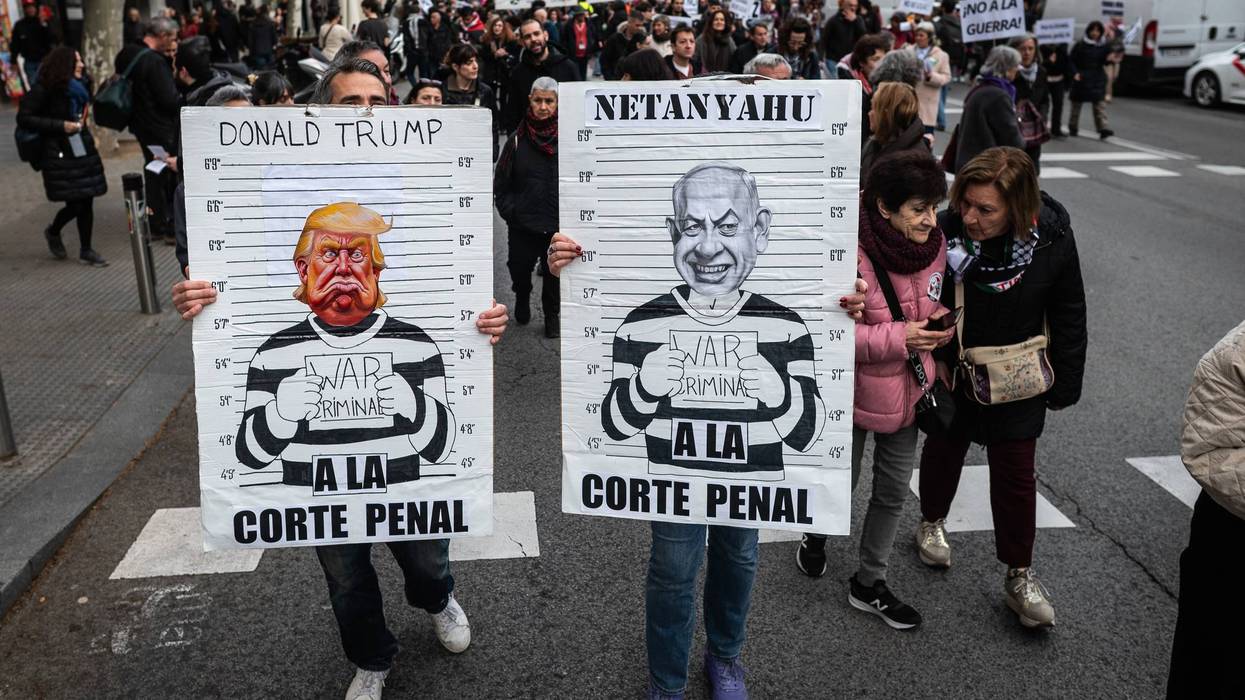
Israel’s official position leaves the international community with no choice but to take direct, coordinated action across five key fronts.
It is now official: Israeli Prime Minister Benjamin Netanyahu has flatly rejected the core conditions of the Board of Peace framework, explicitly stating that Israel will neither adhere to a ceasefire nor withdraw its forces from Gaza.
During a cabinet meeting on Sunday, Netanyahu stated with unambiguous language, "Israel rejects the 15-point document published by the Board of Peace for Gaza."
In a previous conversation with lead envoy Nickolay Mladenov, Netanyahu set conditions—such as demanding unilateral operational freedom for the Israeli military to strike inside Gaza at will—that render a genuine peace agreement structurally impossible.
The Israeli army leadership, under Chief of Staff Eyal Zamir, reinforced this posture by outlining three uncompromising "red lines" to the political establishment: complete operational freedom to eliminate perceived threats anywhere in the strip, strict control over all weapons entering or exiting Gaza, and zero military withdrawal unless Hamas is completely disarmed.
We must resolutely reject the premise that the slaughter of the innocent can ever become an accepted routine.
One can fault Netanyahu for many things, including ongoing genocide. But in recent years, he has been remarkably straightforward about his intentions; therefore, no one can claim that Netanyahu has fooled anyone.
Earlier this year, while speaking at a conference in an occupied West Bank settlement, Netanyahu explicitly boasted that he had instructed the Israeli military to expand its physical footprint and permanently occupy at least 70% of the Gaza Strip—a massive expansion far beyond the temporary administrative demarcation lines established in previous truce outlines.
Meanwhile, his far-right ministers have pushed the government’s rejectionist stance even further. Finance Minister Bezalel Smotrich and National Missions Minister Orit Strock issued a joint demand for an emergency cabinet meeting to roll back authorization for the deployment of the International Stabilization Force (ISF).
The ISF, designed under the Board of Peace framework as a transitional peacekeeping body, was meant to oversee humanitarian security, starting with pilot recovery zones in Rafah.
Yet Smotrich and Strock claimed the security cabinet was "misled" into approving the force, arguing that allowing international personnel into Gaza endangers Israeli operational freedom and directly contradicts their explicit war aims.
These latest moves, along with the military's strict "red lines," confirm what recent months of relentless bombardment have made clear: The Israeli government has no intention of ending its genocide in Gaza or relinquishing control over the besieged and devastated territory.
But highlighting such positions will make no difference, aside from once more accentuating Israel's total lack of desire for peace and its intention to perpetuate conflict.
While true, such realization on its own is worthless considering that what is taking place in Gaza and the West Bank is beyond horrific, and that the daily killing of Palestinians makes the term "ceasefire" a cruel joke.
While diplomats debate frameworks, Israeli strikes continue to claim civilian lives daily—bringing the post-truce death toll to over 1,250 and the total killed since October 2023 to more than 73,000.
Therefore, action is needed, and urgently so. Indeed, Israel’s official position leaves the international community with no choice but to take direct, coordinated action across five key fronts.
First, Arab, Muslim, and allied governments must leverage every available international platform, starting with the United Nations General Assembly and Security Council, to formally condemn Israel’s violation of the Gaza peace framework and expose its bad-faith negotiations.
States must move beyond symbolic statements and invoke mechanisms like the "Uniting for Peace" resolution to bypass Western vetoes, push for binding sanctions, and implement a universal arms embargo against Israel.
Second, a renewed global campaign must recenter Gaza and the West Bank, exposing Israel's broader territorial objectives—specifically the systematic ethnic cleansing of Gaza and the quiet, administrative annexation of the West Bank.
Civil society, trade unions, and grassroots organizations worldwide must pressure their respective national governments to sever diplomatic, economic, and military ties with Israel until it complies with international law.
Third, International legal bodies must accelerate their proceedings. Pressure must be renewed on the International Criminal Court (ICC) to execute arrest warrants for senior Israeli leadership, while the International Court of Justice (ICJ) must enforce provisional measures and issue definitive rulings regarding Israel’s violations of the Genocide Convention.
Legal compliance must be treated as a non-negotiable prerequisite for international relations.
Fourth, a unified international media push is necessary to counter state-sponsored propaganda, keeping public focus fixed on Israel's long-term strategic plans: the permanent displacement of Gaza's population and the formal takeover of Palestinian land.
Independent media outlets, journalists, and cultural institutions must challenge official narratives that frame Israeli aggression as self-defense, centering the lived realities and testimonies of Palestinians under siege instead.
Fifth, the international community must bypass Israeli obstruction to ensure massive quantities of food, medical supplies, and shelter materials enter Gaza immediately to prevent widespread starvation and winter exposure.
International aid agencies must establish protected humanitarian corridors by global mandate, refusing to allow Israel to use manufactured famine and humanitarian denial as weapons of war.
With Israel’s intentions fully unmasked, the global community must shift from passive mediation to active enforcement.
Israel wants to normalize genocide, just as it normalized the illegal siege on Gaza before that; the military occupation of the West Bank, East Jerusalem, and Gaza before that; and the ongoing displacement of Palestinians since 1948.
We must resolutely reject the premise that the slaughter of the innocent can ever become an accepted routine.
Knowledge of the atrocity is not enough. Expressing solidarity in words alone is not enough. Concrete, decisive action is required today—and holding the perpetrators accountable remains entirely within our power if the world finds the political courage to act.

One critic said he hopes the Hague-based tribunal will investigate the Trump administration's "illegal, unproven, expensive, destructive, and pointless boat strikes."
US Defense Secretary Pete Hegseth on Wednesday urged Latin American governments to quit the International Criminal Court, accusing the Hague-based tribunal of plotting to prosecute American and allied military personnel while defending the Trump administration’s increasingly aggressive—and, experts say, illegal—campaign against alleged drug traffickers.
"We are working together, we are building together, and we are training together," Hegseth said during a speech in Panama at a gathering of the Americas Counter Cartel Coalition (ACCC), a group of mostly right-wing regional governments. "We are killing terrorists. And we're defeating the failed and toxic ideologies of radical socialism and communism."
"Now, speaking of socialism, make no doubt about it, the international left, along with their enabling left-wing media, is plotting to unlawfully assert International Criminal Court jurisdiction over US and partner military personnel and operations," Hegseth asserted, offering no evidence or explanation to support his claim.
Legal experts, including former US military Judge Advocate General Corps attorneys, have argued that aspects of the Trump administration's bombings of boats allegedly smuggling drugs in the Caribbean Sea and Pacific Ocean—particularly Hegseth's alleged order to "kill everybody" and follow-up attacks targeting survivors—may constitute unlawful extrajudicial killings and war crimes. More than 220 people have been killed in at least 66 such strikes over the past 11 months, with survivors, victims' relatives, and regional governments claiming at least some of those killed were fishers with no narco-trafficking ties.
Hegseth has also been accused of promoting war crimes in the illegal US-Israeli war of choice on Iran by vowing that US forces would not be bound by "stupid rules of engagement," threatening to destroy critical Iranian civilian infrastructure like power plants and bridges, and by boasting that US forces were delivering "death and destruction from the sky all day long" as airstrikes killed hundreds of civilians, including 156 students and staff massacred at an elementary school in Minab on February 28.
"To be clear, there is no legitimate basis for the ICC's lawless power grab that they will entertain anywhere they can in the world," Hegseth said in Panama. "Our efforts in this effort are 100% lawful under the laws of armed conflict. It's striking that this so-called court and other globalist bodies undermine our efforts but do nothing to hold real terrorists and real tyrants accountable. And that's why the ICC poses a threat to your national sovereignty, your constitutional mandates, and the national interests of your people—just as it does ours."
"That's why I strongly encourage every ACCC member to leave the ICC, and reject their attempts to rob your governments and your courts of your sovereignty," he added. "I know as a soldier, I swore an oath to the Constitution, not some fake and illegitimate international court."
si
Trump's assault on the ICC, which began during his first administration, has escalated during his second term. In February 2025, the president issued an executive order declaring a national emergency over the ICC and authorizing sanctions against court personnel involved in investigations concerning the United States and Israel—two of whose leaders are fugitives from the tribunal.
In November 2024, the ICC issued arrest warrants for Israeli Prime Minister Benjamin Netanyahu and former Defense Minister Yoav Gallant for alleged crimes against humanity and war crimes in Gaza, including murder and forced starvation. The court also ordered the arrest of three Hamas leaders for the same categories of crimes allegedly committed during and after the October 7, 2023 attack on Israel, but Israeli forces extrajudicially assassinated all three of the men.
The warrants for the Israeli leaders incensed the Trump administration, which responded with sanctions and threats.
Last month, Secretary of State Marco Rubio announced a "campaign to dismantle" the ICC, promising to “teach” the court "the full meaning of American resolve." The State Department, meanwhile, said the campaign would seek to “systematically disable” the tribunal’s ability to operate or target US personnel.
The US is not a party to the Rome Statute governing the ICC. However, the treaty states that individuals from nonsignatory nations can be held liable for crimes committed in the territory of a member state, a situation applicable in Palestine, which is an ICC member, while Israel is not.
US disdain and animosity toward the ICC long predates Trump's presidencies. During the administration of George W. Bush, the US passed the American Service Members’ Protection Act—also known as the Hague Invasion Act—which authorizes the president to use “all means necessary and appropriate,” including military intervention, to secure the release of American or allied personnel held by or on behalf of the ICC.
The Trump administration is seeking to persuade countries to abandon the ICC.
Chad and Venezuela—where Trump ordered a January invasion to abduct President Nicolás Maduro and his wife—have announced plans to withdraw, with Chad saying its decision followed a call from a senior US diplomat. The ICC’s Assembly of States Parties has urged both countries to reverse course, warning that the departures threaten the global fight against impunity. The two nations join Burkina Faso, Mali, and Niger, which also initiated ICC withdrawals in 2026.
Only Burundi and the Philippines have actually completed withdrawals from the Rome Statute. Hungary, meanwhile, reversed its planned departure this year after voters ousted longtime right-wing Prime Minister Viktor Orbán.
Hegseth’s Panama appearance coincided with Colombia becoming the ACCC’s 19th member, as new right-wing President Abelardo de la Espriella requested joint US-Colombian military operations against drug cartels and trafficking.
The alignment marks a sharp turn from the government of former leftist President Gustavo Petro, which repeatedly criticized Trump administration boat strikes and supported the South African-led genocide case against Israel currently before the International Court of Justice, also in The Hague.
Such cooperation has led to US intervention in Ecuador's war on drugs. US and Ecuadorian forces are carrying out Operation Total Extermination, a joint counternarcotics operation beset by allegations of human rights violations, including arbitrary detention, torture, and destruction of civilian property.
Responding to reporting, University of Virginia researcher and doctoral student Joseph Bouchard wrote on X that the "ICC may investigate the US's illegal, unproven, expensive, destructive, and pointless boat strikes."
"They should, and hopefully hold these criminals accountable," he asserted. "They are killing hundreds of fishermen for no reason beyond cruelty."

The head of one affiliated organization called Trump's sanctions "a slap in the face to victims and survivors of grave crimes everywhere who depend on the ICC as a court of last resort.”
A quartet of US human rights groups filed a federal lawsuit on Tuesday challenging the Trump administration’s sanctions targeting members of the International Criminal Court for their roles in seeking to hold Israeli leaders accountable for alleged crimes against humanity in Gaza.
The American Friends Service Committee (AFSC), the Center for Constitutional Rights (CCR), Human Rights Watch (HRW), and the Open Society Institute (OSI) filed suit in the US District Court for the Southern District of New York challenging the Trump administration’s sanctions against ICC prosecutors and judges, a United Nations human rights expert, and three Palestinian human rights groups.
The groups argue that US President Donald Trump's February 2025 executive order that imposed sanctions on the ICC are a “blatantly illegal attack on international justice and should be struck down."
James Goldston, executive director of the Open Society Justice Initiative, called the sanctions "a slap in the face to victims and survivors of grave crimes everywhere who depend on the ICC as a court of last resort.”
Trump's sanctions follow the ICC's November 2024 issuance of arrest warrants for Israeli Prime Minister Benjamin Netanyahu and Yoav Gallant, his former defense minister, for alleged crimes against humanity and war crimes in Gaza, including murder and forced starvation. The tribunal simultaneously issued warrants for the arrest of three Hamas leaders for the same categories of crimes allegedly committed on and after the October 7, 2023 attack on Israel. However, Israel extrajudicially assassinated all three of the men.
The groups' complaint argues that the Trump administration has effectively transformed human rights advocacy into a potential criminal offense. Organizations can face severe civil and criminal penalties for providing what the government may determine are “services” to sanctioned individuals or groups.
That threat, they contend, has already had tangible consequences. The plaintiffs say the sanctions have disrupted their ability to represent victims of war crimes, submit evidence and legal arguments to the ICC, and collaborate with sanctioned Palestinian organizations on research, litigation, advocacy, and humanitarian work.
Targeted groups and individuals have experienced "frozen or closed bank accounts, rejection of financial transactions, denial of access to digital services, and travel bans," CCR notes. "US organizations, including the plaintiffs, can face punishment of up to 20 years of imprisonment and exorbitant fines for providing services to sanctioned persons or entities."
CCR called the sanctions "one of many" actions taken by the Trump administration "against free speech, protest, and advocacy in support of the human rights of Palestinians."
“For many years, I have represented victims in pressing for justice for crimes committed by the powerful, and finally saw much-needed, even if overdue, investigations opened at the ICC," said CCR senior staff attorney Katherine Gallagher. "In response, the Trump administration took the extraordinary step to not only deny Palestinians and victims of US torture equal access to justice, but to criminalize and punish them, their lawyers and advocates, and their partners."
Israeli officials and their supporters argue that the ICC and the International Court of Justice—where Israel is facing a genocide case filed by South Africa and formally supported by nearly 20 nations—have unfairly singled out Israel. However, the ICC has launched 18 investigations involving conflicts in countries including Afghanistan, the Central African Republic, the Democratic Republic of Congo, Libya, the Philippines, Sudan (Darfur), and Ukraine.
Trump’s order asserts that ICC efforts involving US or allied nationals constitute a threat to American national security. But the new complaint argues that there is no genuine “national emergency” that can lawfully justify invoking the International Emergency Economic Powers Act against the court’s routine judicial work.
"The US government’s efforts to dismantle the ICC and punish people seeking justice for grave human rights violations harm far more than the individuals and groups facing sanctions," AFSC general secretary Joyce Ajlouny said in a statement Tuesday. “It is an affront to all victims and survivors of war crimes and genocide."
Ajlouny asserted that the Trump administration "seeks to intimidate human rights defenders and deter people of conscience from advocating for the rights and dignity of others."
"We are joining this lawsuit because we refuse to stay silent when the pursuit of justice is criminalized," she added.
Tuesday's complaint is the latest in a string of lawsuits challenging Trump's sanctions.
Francesca Albanese, the UN special rapporteur on the situation of human rights in the Palestinian territories occupied since 1967, earlier this year sued Trump and three of his senior Cabinet officials over sanctions imposed on her and her family. Although a federal district judge temporarily blocked the move on First Amendment grounds, an appeals court quickly reinstated the sanctions via an administrative stay.
In April 2025, two human rights advocates sued over sanctions against then-ICC Prosecutor Karim Khan, arguing that the restrictions violated their First Amendment rights. A federal judge subsequently found the advocates were likely to succeed on their constitutional claims and issued a preliminary injunction protecting their communications with the court.
In June, three sanctioned ICC judges—Judges Kimberly Prost of Canada, Solomy Bossa of Uganda, and Reine Alapini-Gansou of Benin—filed suit against the Trump administration, arguing that the president's order directly violated the Administrative Procedure Act, which prohibits the government from making arbitrary and capricious policy changes.
Last month, Democracy for the Arab World Now (DAWN) and the Taxpayer Alliance Against Genocide also sued Trump and senior administration officials over the ICC sanctions.
“The Trump administration is using the blunt instrument of economic sanctions not only to punish human rights defenders but to police the political expression of millions of Americans,” DAWN executive director Omar Shakir said at the time. “The government is violating the constitutional rights of American citizens in order to shield officials of a foreign government who have committed a genocide.”

Criticizing individual Israeli leaders like Benjamin Netanyahu should not be seen as an attack on all Jews.
Does criticizing actions of the Israeli government or the behavior of its prime minister fuel antisemitism? Despite the stretch of logic required to make this argument and the danger its bizarre conflation presents to American Jews, some US pro-Israel organizations are working overtime to establish the case that criticizing Israel puts American Jews at risk. Their view on this matter has now been echoed by Israeli Prime Minister Benjamin Netanyahu who, before leaving Israel for his meeting with US President Donald Trump, used an interview with an American TV network to level this very charge against New York City Mayor Zohran Mamdani.
While tensions between Mamdani and pro-Israel groups have been brewing since his 2025 election campaign, it was recently reignited in the lead up to Netanyahu’s announced visit to the US. Mayor Mamdani was asked by a reporter whether he would fulfill a campaign pledge to arrest the Israeli prime minister as a war criminal, as per the indictment issued by the International Criminal Court (ICC).
In response, the mayor convened a group of legal experts who concluded that the city, on its own, did not have the authority to make an arrest—only the federal government could do that. In an effort to put the matter to rest, Mamdani released a short video in which he acknowledged that he lacked the power to order an arrest but nevertheless called out Netanyahu as a war criminal responsible for the deaths of “more than 73,000 people” and stated that he would not welcome him in New York City. In his video, Mamdani did not mention Israel, nor did he mention the Jewish people or the citizens of Israel. This was, he observed, simply about Netanyahu’s crimes cited in the ICC arrest warrant.
Some pro-Israel groups immediately denounced Mamdani’s video and charges against the Israeli prime minister. They accused him of “repeatedly singling out the world’s only Jewish state…leaving many Jewish New Yorkers feeling targeted and unwelcome.” One group characterized the video as “blood libel and outrageous lies.” While still another charged Mamdani with “fomenting antisemitism.”
A few days later, a Hispanic man, whom police said had mental health issues, allegedly stabbed two people, one was Asian and another Jewish. In both instances, observers said they heard the attacker shouting “Allahu Akbar.”
The same pro-Israel groups that have been conflating Israel with American Jews and relentlessly condemning Mamdani leapt into the fray, blaming the mayor for making New York unsafe for Jews by “using his platform to viciously attack Israel.” One prominent Jewish leader called on the mayor to resign, charging him with “dereliction of duty.”
Mamdani immediately responded to these charges condemning the stabbings as “hateful and despicable attacks that have no place in our city” and noted that his administration had already dramatically increased investment in hate crime prevention “so that we can start to address the root causes of this bigotry and hatred, as we look to root out the scourge of antisemitism.”
The mayor added: “When it comes to my comments about Prime Minister Benjamin Netanyahu, they are critiques based not on my personal analysis, but rather on objective facts. They are critiques of a political leader, not of people of a specific faith or religion or background. And my responsibility as mayor of the city is to keep every New Yorker safe, no matter where they come from, what they believe in or frankly, even if they agree with my politics. My job is to keep them safe.”
The mayor was not without defenders in the Jewish community. Brad Lander, who describes himself as a liberal Zionist and who recently defeated a pro-Israel congressman, described the attacks as “almost certainly an antisemitic hate crime and quite likely an anti-Asian hate crime, but they are not the fault of the mayor for calling Netanyahu a war criminal.” Lander added, “The effort to connect the mayor to that… is a political effort to shut down criticism of Israel,” and called it “weaponizing antisemitism.”
Peter Beinart, one of America’s most thoughtful progressive Jewish thinkers, directly took on the pro-Israel Jewish establishment by noting that it was they, not the mayor, who are conflating Israel with the Jewish community. Beinart wrote: “Zohran Mamdani keeps saying again and again that his critique of Israel… has nothing to do with his feelings toward Jews in New York, because he separates Israel, as a state, from Jewish New Yorkers. The people who are making this conflation… are the very establishment Jewish leaders who are now attacking Mamdani.”
The problem here is two-fold. Antisemitism is real, and conflating American Jews with Israel is wrong and dangerous whether it is done by pro-Israel advocates who want to identify all Jews with Israel for political purposes, or by haters of Jews who want to hold Jewish people, in general, responsible for the crimes committed by that state. In the first instance the effort is designed, as Lander notes, to silence criticism of Israel claiming that charges leveled against that state put all Jews at risk. In the second instance, the conflation serves to fuel the preexisting bigotry of some by holding all Jews responsible for the crimes committed by others.
The bottom line is Mamdani, Lander, and Beinart are right, and the pro-Israel establishment is wrong.
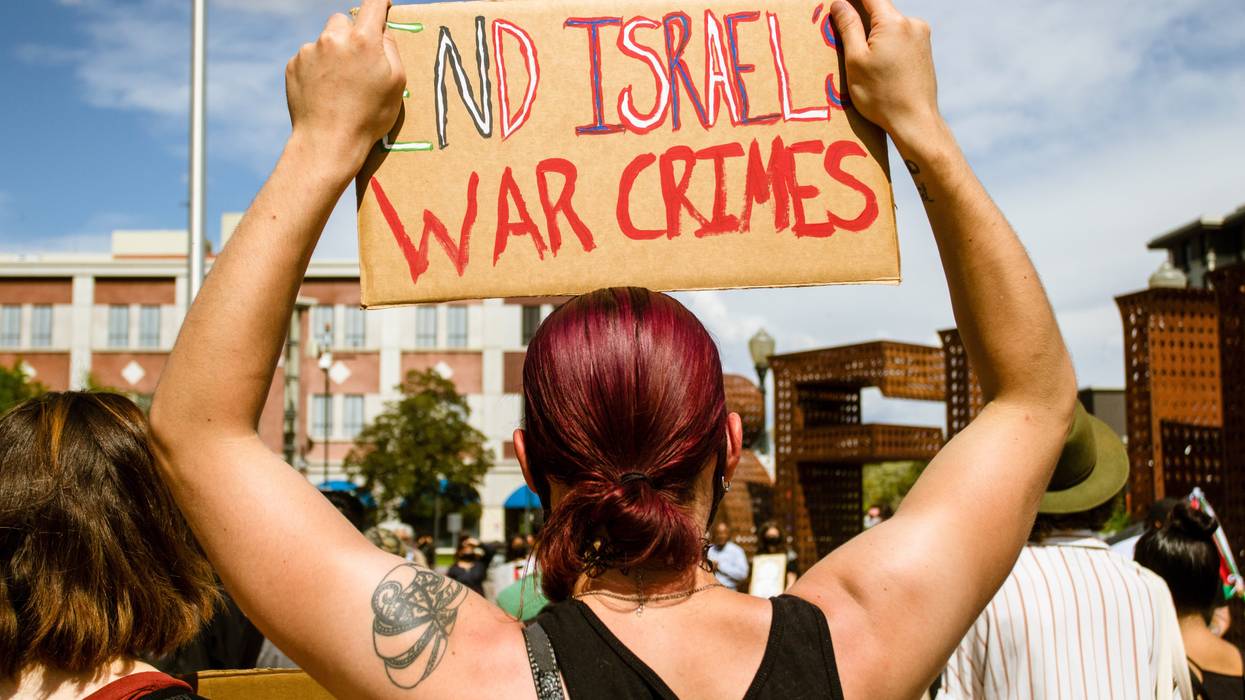
The effort to sideline the International Criminal Court may prove more costly than it looks.
At Camp David on July 31, Donald Trump said plainly what Washington’s fight with the International Criminal Court is now about. The US government's campaign to weaken the court, he said, was meant to defend Israeli Prime Minister Benjamin Netanyahu and “various other people,” not himself. Marco Rubio added that five countries had announced plans to leave the ICC since the administration began its latest push against it. That makes the dispute larger than one court or one case. The real question is what the United States gives up when it treats an institution as useful against an adversary but intolerable when it reaches an ally.
Military strength, economic weight, and alliances matter, of course, but they are not the whole story of great-power influence. For decades, the United States also benefited from helping write the rules and from being able to say that those rules reflected something more than American preference. The postwar legal and institutional order became part of US power itself. It helped Washington isolate rivals, keep allies together, and present its policies as defenses of a wider system. That is why the current approach carries a cost that is easy to miss. In protecting allies from legal pressure today, Washington may be spending some of the credibility it will need tomorrow.
The contrast with Russia is especially hard to explain away. During Joe Biden’s presidency, Washington backed accountability efforts over Russian crimes in Ukraine, and Congress loosened restrictions on U.S. assistance to the ICC for its Ukraine investigation. The tone changed once the court issued arrest warrants for Netanyahu and former Israeli Defense Minister Yoav Gallant in November 2024. Trump’s 2025 executive order authorized sanctions connected to ICC actions against the United States and Israel. Since then, the administration has broadened the pressure to include travel restrictions, more sanctions, and diplomatic pressure on governments that continue to support the court.
There is a serious legal argument on the American side, and the article does not depend on pretending otherwise. The United States never joined the Rome Statute; Israel did not either. US officials have long objected to the prosecution of nationals of non-member states without their governments’ consent. The ICC answers that it has territorial jurisdiction over Gaza and the West Bank, including East Jerusalem. Those are competing legal positions. But there is still a difference between challenging a court’s jurisdiction and punishing its officials while urging other countries to abandon it. One contests a ruling. The other can end up weakening the institution that produced it.
That is where the damage to American credibility begins. A legal order does not have to be perfectly consistent to matter, but it cannot survive for long if its most powerful defenders appear to want one standard for opponents and another for friends. After the Netanyahu and Gallant warrants, Josep Borrell, then the European Union’s foreign policy chief, said the decisions were binding on EU member states. Outside the West, the contradiction is even harder to ignore. Washington asks governments to uphold sovereignty, accountability, and international rules in one crisis, then attacks an institution applying those rules in another. That does not erase U.S. power, but it makes American appeals less persuasive.
A common reply is that international law has always followed power. Courts have no armies, and major states can often avoid consequences that weaker ones cannot. There is plenty of truth in that argument. Still, political protection has a way of expiring. Augusto Pinochet was arrested in London in 1998 on a Spanish extradition request. Former Chadian president Hissène Habré was eventually tried in Senegal and sentenced to life imprisonment. Slobodan Milošević was put on trial after he lost power, though he died before a verdict. The legal routes in those cases were different, but the lesson is similar: power can postpone accountability. It does not always cancel it.
The value of the ICC should therefore not be judged only by how many people it immediately puts behind bars. Warrants can change diplomatic calculations even when an arrest never happens. After the court issued a warrant for Vladimir Putin in 2023, he did not attend the BRICS summit in South Africa in person. Pretoria, as a member of the ICC, would otherwise have faced intense pressure over whether to arrest him. That episode was modest compared with a trial, but it showed that legal exposure can narrow a leader’s room for maneuver.
This matters even more because the international system around the United States is changing. Western governments once had far more influence over the institutions and language used to define international legitimacy. They still have enormous influence, but not the near-exclusive position they once enjoyed. South Africa’s genocide case against Israel at the International Court of Justice is one sign of the shift. Governments in the Global South are increasingly using the same legal institutions that Western states helped build, sometimes in ways Washington and its allies did not expect. The argument is no longer only about whether international law matters. It is also about who gets to interpret it.
That is why the effort to sideline the ICC may prove more costly than it looks. Washington can sanction officials, restrict travel, and encourage governments to leave the court. It may even succeed in making the institution weaker. But weakening a forum also means giving up some ability to shape what that forum becomes. Rules are not written once and then left alone; they are interpreted, challenged, and remade over time. A country that walks away whenever the outcome is inconvenient leaves more room for others to do that work.
America’s problem, then, is not really one arrest warrant. It is the gap between claiming leadership of a rules-based order and accepting the rules only when they produce comfortable results. Shielding an ally from immediate legal pressure may look like a win in Washington. The harder question is what happens when the next crisis requires the United States to persuade other governments that sovereignty, accountability, and legal restraint should apply even when compliance is costly.
The coming international order will not be shaped by aircraft carriers, GDP, and military budgets alone. Legitimacy will matter too, especially as more states compete over how global rules are read and enforced. The United States helped build a system that gave it unusual influence over that process. Its gamble now is that it can weaken parts of that system without weakening its own position inside it. That may turn out to be a much more expensive bet than Washington expects.